
From standalone software and systems to an agentic AI platform
Many organizations still rely on a complex array of systems: ERP for orders and inventory, PIM for product data, CRM for customer relationships, and on top of that, various integrations with suppliers, carriers, and marketplaces.
For years, that worked just fine. And let’s be honest: you still need that foundation. But standalone systems and databases alone are no longer enough, not if you want to adapt more quickly, operate more intelligently, and keep pace with a market that’s constantly changing.
The next step, therefore, isn’t just adding another tool. It’s making AI a structural part of your organization, not as a standalone chatbot or experiment, but as a fundamental layer underlying your processes.
And that starts with data.
From raw data to AI-ready knowledge with vector databases
In addition to traditional relational databases, vector databases are rapidly gaining ground. In these databases, data is not only stored but also translated into context and meaning.
Content such as product information, manuals, quotes, price lists, emails, customer questions, and internal notes is automatically converted into vectors via embedders, a format that AI actually understands. New data is immediately processed, enriched, and added to the knowledge layer. This creates a dynamic data source that is always up-to-date and AI-ready.
The big difference? Systems no longer search solely for exact words or fixed fields, but for meaning and context. As a result, a customer inquiry doesn’t have to match a product description word for word to still find the right answer, document, or part.
That’s how your organization builds a collective memory that keeps getting smarter.
APIs as a stable foundation for intelligence
Existing API integrations remain the backbone of the platform. ERP, PIM, CRM, WMS, and external systems continue to exchange data just as they always have. The foundation remains the same; the difference lies in what happens on top of it.
Data coming in via APIs is automatically enriched by embedders and incorporated into the vector database. Data going out is no longer driven solely by fixed rules, but also by context, intent, and prediction.
In this way, APIs not only connect systems to one another but also form the basis for intelligent behavior.
MCP as a connecting layer between tools and agents
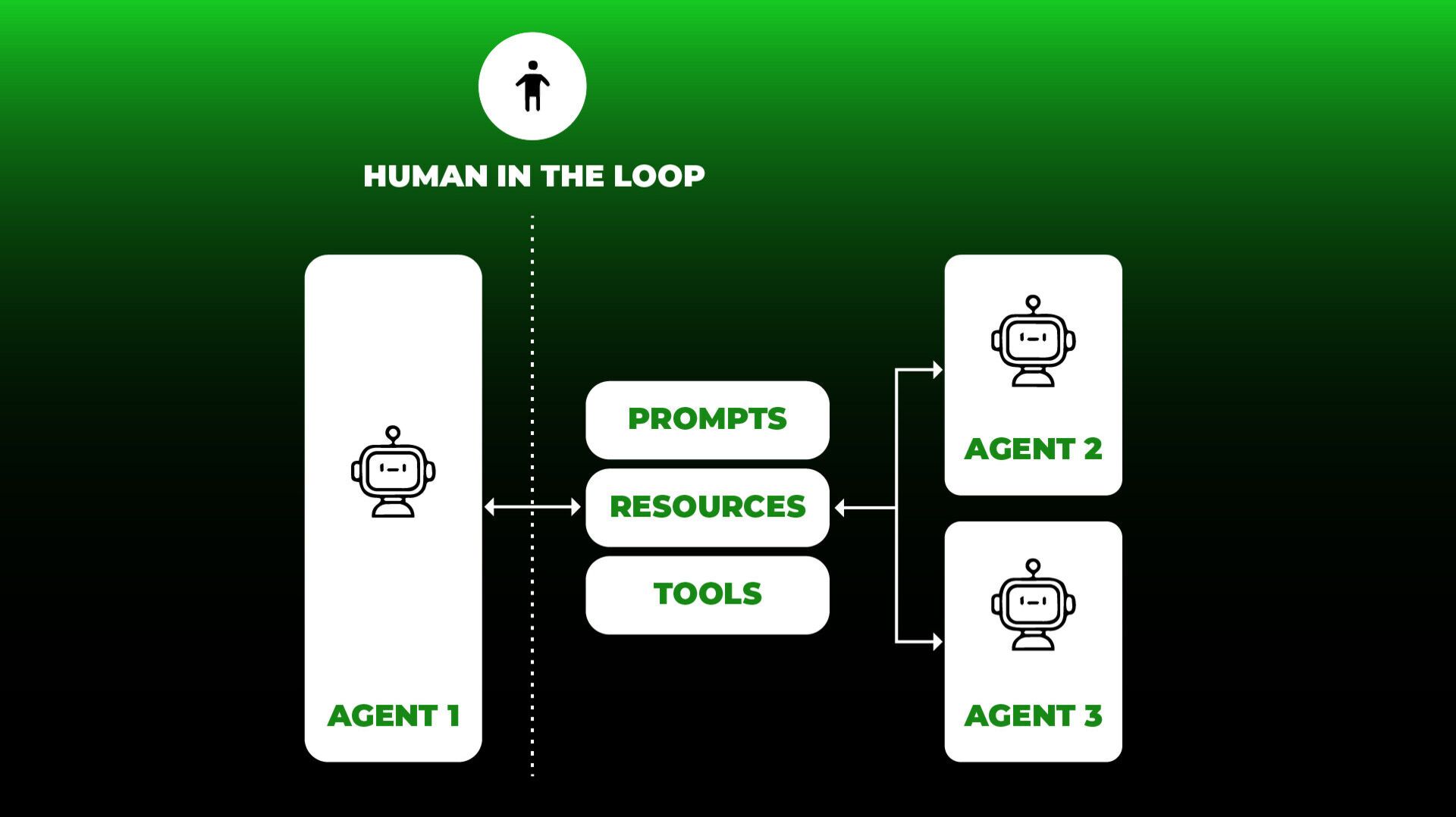
Where the landscape is truly changing is with the introduction of MCP. Model Context Protocol is an open standard that enables AI applications to collaborate with data sources, tools, and existing systems in a standardized way.
Instead of building custom solutions for each individual connection, MCP makes it possible to provide information and functionalities to AI agents in a standardized way. As a result, these agents can operate more consistently with the right context, the right tools, and the right access rights.
This makes it easier to scale up AI within your organization in a secure and manageable way, not as isolated experiments running side by side, but as a cohesive ecosystem in which agents can be deployed specifically for particular tasks.
The organization as a network of specialized agents
Imagine an organization that sells thousands of technical components to business customers, with many suppliers, fluctuating prices, and complex logistics. Instead of a single centralized AI solution, they’re building a network of specialized agents that collaborate based on the same data and context.
- The procurement agent analyzes supplier data, historical prices, delivery times, and contract terms. Using the vector database, it identifies comparable products, alternative suppliers, and opportunities to procure more efficiently.
- The transportation agent collaborates with carriers and logistics partners. He compares performance, rates, and availability and makes adjustments as soon as disruptions arise. Decisions are made based on real-time context, not just on fixed agreements.
- The price-watching agent continuously monitors the market. He combines competitor prices, inventory levels, and margins, and advises on price adjustments or automatically implements them within agreed-upon ranges.
- The content agent uses product data, technical documentation, and customer inquiries to generate and keep web content, product pages, and FAQs up to date. This ensures that content better aligns with customers’ search intent and specific questions, without requiring manual writing.
- The customer agent analyzes order history, usage, and inventory. It proactively sends notifications when inventory is low, suggests alternatives, and supports account managers with relevant insights.
From agent collaboration to agent-to-agent communication
The next step, which is already becoming apparent, is agent-to-agent communication. Agents not only collaborate within a single organization but also independently engage in conversations with agents outside the organization.
Consider a procurement agent who goes out into the market on their own. They initiate a conversation with a supplier’s agent, not via email or manual quotation processes, but through structured interactions in which price, delivery time, volumes, and terms are coordinated directly. The supplier agent does the same, based on their own context, goals, and frameworks.
This isn’t science fiction. It builds on the same principles: shared protocols, clear context via MCP, and transparent rules. People stay in control, but no longer have to manage every link in the chain themselves.
The agentic AI platform as the organizational brain
When you bring these layers together, the result is not a collection of tools, but an agentic AI platform. A platform in which data is continuously made AI-ready, agents perform tasks independently and communicate with one another, and processes become adaptive rather than static.
The organization thus shifts from manual coordination to strategic steering. People focus on direction, frameworks, and exceptions. Agents take on the operational work, learn from data, and improve themselves within controlled limits.
The next logical step
AI integration, therefore, does not mean replacing your existing systems. It means connecting them, enriching them, and making them smarter. With embedders, you continuously make data AI-ready. With vector databases, you add meaning and context. With MCP, you bring coherence and control. And with agents, you translate strategy into action.
The next step is logical: agents that talk to other agents. Not as a gimmick, but as a fundamental building block of the organization of the future. This doesn't create a loose collection of technologies, but a single intelligent network that is scalable, learns from data, and is constantly evolving.